While
traditional platformers aren’t all that common anymore, many games have
taken elements of their gameplay and spun them off into other genres,
like rogue-likes.
I should
back up for a second, because even though Spelunky has randomly
generated levels, it is technically not a rogue-like in the strict
definition as it doesn’t not have most of the role-playing elements
the genre calls for (It's also not really that new, having come out in 2008). It is what some people call rogue-lite, as it
lacks a level system or a turn based gameplay. I wouldn’t call it that
though. In doing research for this game, I learned that some in the
community have yet another name for games like
this: Procedural Death Labyrinth. I couldn’t think of a more
appropriate description of Spelunky if I tried.
Gameplay
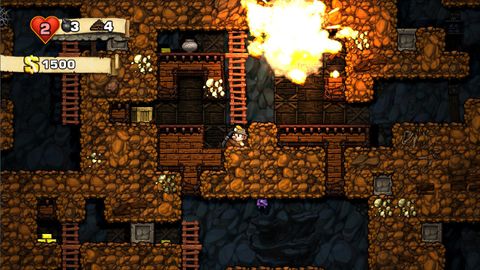
wise, it is pretty simple. You explore a mine filled with various
enemies in a free range, 2D platforming style. You have two goals, stay
alive and find the exit. You can find items to help
you through and treasure to increase your score, but none of these are
required, outside of the occasional use of bombs and ropes. The levels
are randomly generated, so you will never play the exact same stage
twice. I am not always a fan of this, but it
works here for the most part. However, it also leads to some of the
games biggest flaws. This may not have retained all the aspects of those
old platformers, but it is as hard as any of them.
The
biggest issue here is the sheer amount of blind jumps and drops. I
don’t know if was a design choice or its because of the random levels,
but its pervasive leads to more early deaths than anything
else. This was common in the more formative days of gaming, when
things like level design wasn’t really top of mind for developers.
However, these leaps of faith are now considered to be elements of poor
design that add unnecessary frustration (yet another
thing I prefer about modern gaming). It’s made even worse by the fact
that you take fall damage, so even if you don’t die outright you will
take damage. You only get four hits, so it adds up quickly.
That
said, there is far more good than bad. With the exception of the blind
jumps/falls, the game is relatively fair. All of the enemies have
predictable patterns that you can learn to recognize and
avoid. Most take off one point of damage, although some of the bigger
ones hit for two. You also die instantly from spikes or boulders, but
that’s pretty standard and always has been. There are tons of traps,
but you will learn to recognize them and find
ways to set them off without getting hurt. Its kind of cool and adds
some depth and strategy. You can also rescue a “damsel in distress” by
carrying her to the exit of each level. This will reward you with an
extra health point. It’s a nice touch and gives
you incentive to explore each level rather than just head straight for
the exit.
You also
have a fair share of items at your disposal. You start out with four
bombs and four ropes and its relatively easy to find more. Sometimes
the stages lay out in such a way that you need them,
so its good that they thought about that. Pretty much all of the
floors can be destroyed, so it allows for a lot of different paths each
floor. You can get acquire anything from shoes that make you jump hire
to guns. You will occasionally find a shop, where
you can purchase items with treasure you have found. You can even
steal from the shops, but you will incur the wrath of the shopkeeper,
who is armed to the teeth.
You will
come to a new themed area every three floors, with each presenting new
and unique challenges. The enemies get tougher and there are more traps
and pitfalls. It also allows you to continue from
that point, although this is not without its disadvantages. It
prevents you from building up a stash of treasure and items, which you
need to get to the depths of the dungeon. Still, its nice to have the
option in a game where it is very, very easy to die.
It will prevent you from obtaining a high score if you care about that
sort of thing. I know you can play for a spot on an online leaderboard,
but I have never cared about stuff like that.
I can’t
complain too much about the graphics or sound. The game looks good, its
got nice looking 2D graphics that are very detailed. The enemies look
great, as do the items and characters. You can
select from a range of characters, although none of them play any
different. The sound is pretty stock, its good quality but none of it
really stands out at all. There is an extensive journal and everything
gets an entry, from characters to items to enemies.
Its kind of cool even if it doesn’t really add anything from a gameplay
standpoint. Even that is debatable, as I felt a compulsive need to
keep trying to unlock them.
Look,
nothing here is revolutionary or earth shattering. I’m not sure I would
ever go out of my way to play this if I hadn’t already. This was far
from my favorite game and it can be a little too artificially
difficult for its own good. As I said, it is a “procedural death
labyrinth” in every sense of the word. That said, its well made and
technically sound and does a good job of hearkening back to the
challenging platformers of the old days. It’s not “Nintendo
Hard,” but its a good challenge. If you are an old school gamer
looking for something on a new console, or a new school gamer looking
for a jumping off point into older platformers, Spelunky is a good place
to start.
8.25/10
Play this if:
You like old school games, but want a more polished experience
You are a big fan of rogue-lites.
You are looking for a reasonable challenge
Avoid if:
You hate randomly generated levels
You get frustrated by losing all your progress in an instant and having to start again,
Comments
Post a Comment